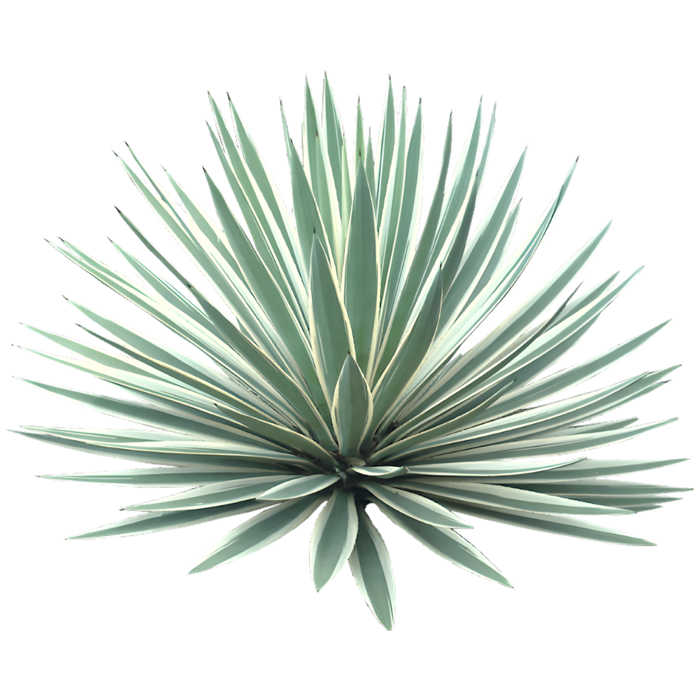
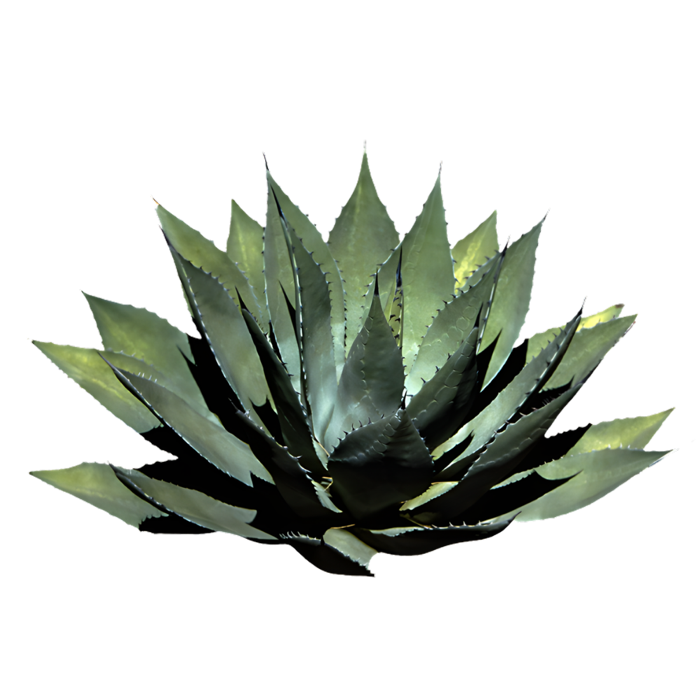
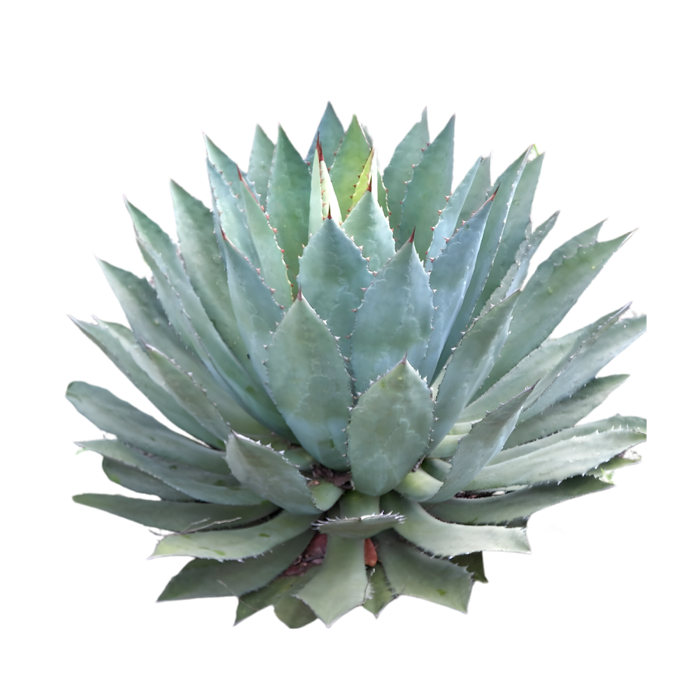
Understanding agave.
Why mezcal is smoky, where tequila really comes from and which glass suits it. Clear enough for a first sip, with enough depth for connoisseurs.
The agave
Over 200 species, only a handful of which are distilled into spirits. Each variety carries the terroir of its home and shapes the character of tequila, mezcal and raicilla.
Worth knowing
- 01
Agave is not a cactus. It is related to asparagus.
- 02
It flowers only once: after years, a flower stalk up to eight metres tall shoots up, and then the plant dies. It is harvested just before.
- 03
The heart of the agave is called a piña because, once trimmed, it looks like a giant pineapple. A tequila agave weighs 30 to 90 kilos.
- 04
Raw, it does not taste sweet: the sugar is locked in a long chain (inulin) that only breaks down during cooking. That is why cooking shapes the flavour more than anything else.
- 05
Harvesting is still done by hand: the jimador cuts away the leaves with a coa, a long pole with a round, sharp blade.
- 06
The blue Weber agave got its name from a German: the botanist Franz Weber described it in 1902.
- 07
One litre of tequila takes six to eight kilos of agave.
- 08
Tequila fields are clones: blue Weber agave is propagated from offshoots, so botanically it is the same plant across tens of thousands of hectares.
Agaves in detail
- Name
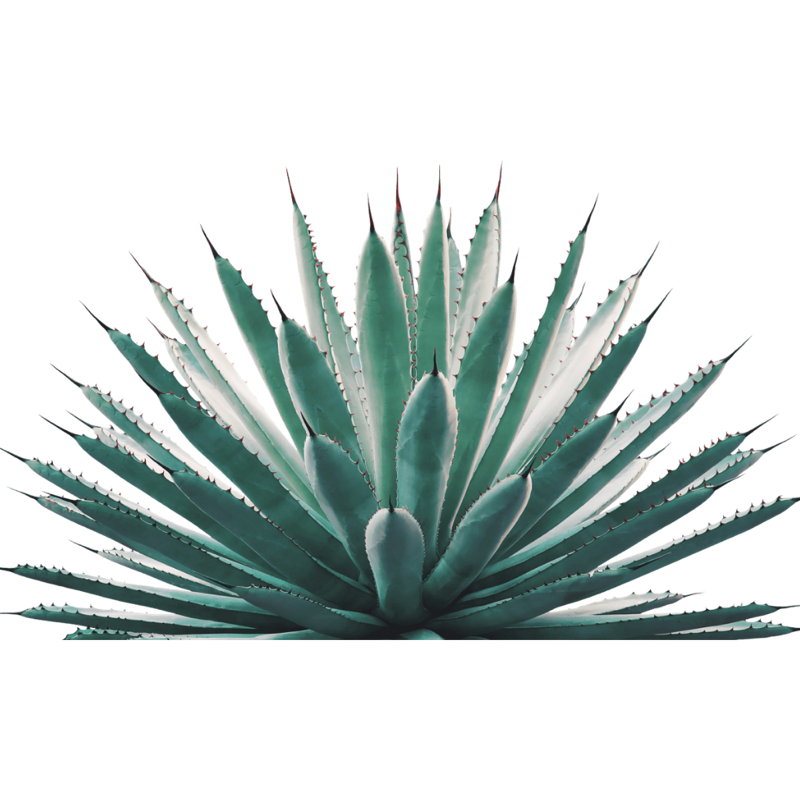
- Blue Weber
- Wissenschaftlicher Name
- Agave tequilana
- Maturation
- 6–8 years
- Sugar content
- High (26 %+ Brix)
- Region
- Jalisco
- Spirit
- Tequila
- Flavour profile
- Clear, sweet, citrus, pepper
- Beschreibung
- Tall blue-grey leaves, sharp terminal spine. The only agave permitted for tequila.
Where they grow
Each dot is a growing region. The legend highlights a variety; a dot opens its profile.
Legend
The long wait
Before an agave can be harvested, it grows for years. Some varieties for longer than a whisky matures.
Wild agave varieties such as Tobalá can take up to 35 years to mature.
Flavour profiles
Six axes, one shape per variety. The shape shifts with each variety.
Clear, sweet, citrus, pepper
Family tree
Genus Agave
200+ species
Cultivated for spirits
~40 species
Tequila
1 Sorte
Mezcal
6 Sorten
Raicilla
2 Sorten
Protecting the future
- years: max. maturation of wild agave
- 35
- agave species in total
- 200+
- species used for spirits
- ~40
- species on the IUCN watch list
- 5
The worldwide rise in demand for mezcal puts heavy pressure on wild agave populations. Species such as Tobalá grow only in the wild and need 15 to 35 years to mature. If they are harvested before flowering, they cannot reproduce. Key regions of Oaxaca, Guerrero and Puebla have seen sharp declines.
Mexico's NOM regulations increasingly require certified, sustainable harvesting practices. The Consejo Regulador requires traceability from field to bottle, and many producers now raise wild varieties from seed in nurseries instead of harvesting mature plants.
Good producers therefore let some mature plants flower and set seed. Only seeds grow new, genetically diverse agaves. Offshoots are clones of the mother plant.
Every bottle of wild agave mezcal stands for decades of growth, and for the responsibility to preserve these plants for generations to come.
Understanding origin
The names on our labels are places, and most of them are far apart. As with wine, the glass shows where an agave grew: altitude, soil and cool nights turn the same plant into completely different spirits.
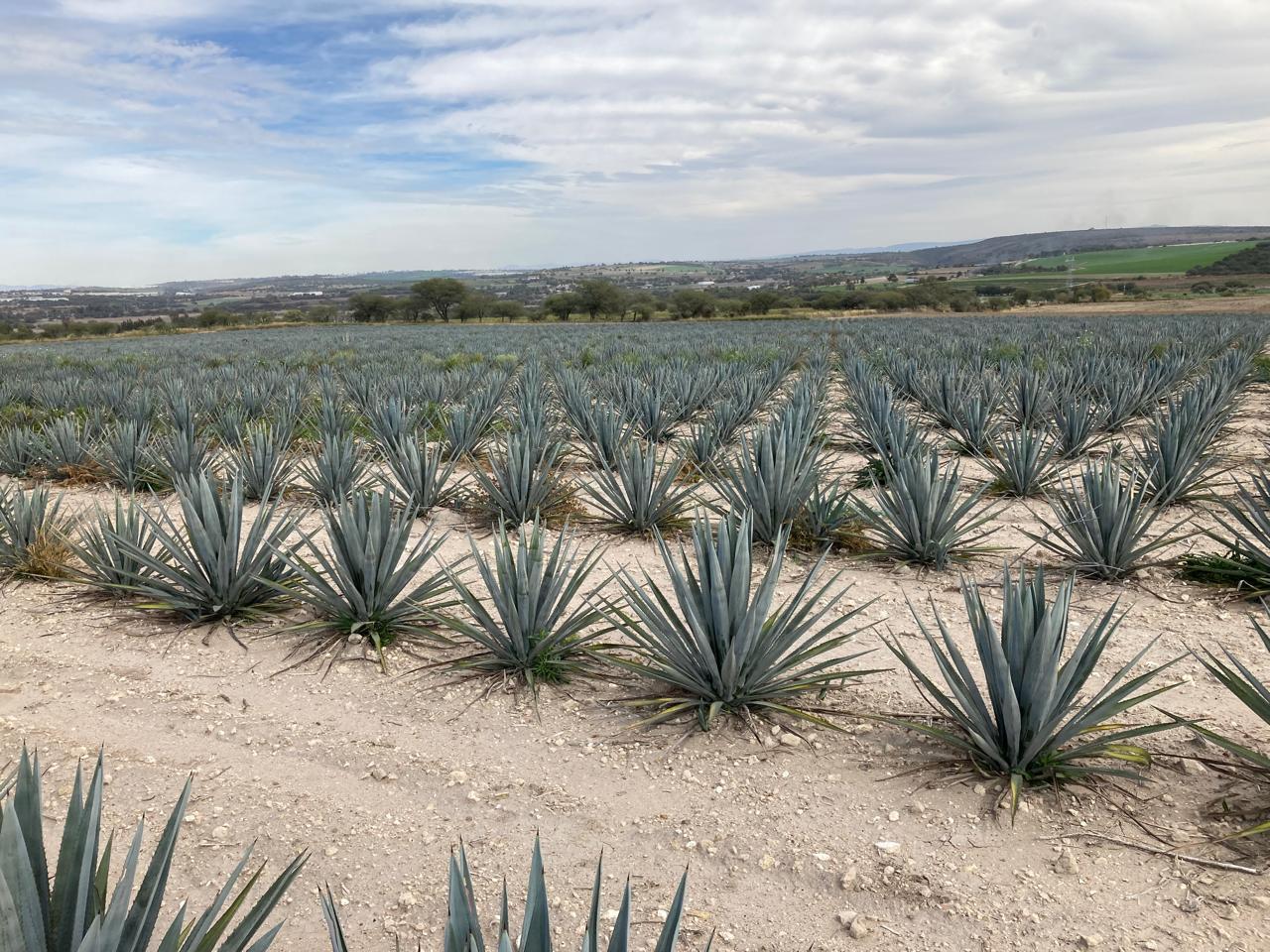
Los Altos de Jalisco
The highlands of Jalisco, the state in western Mexico around the city of Guadalajara. The most important tequila region alongside the valley.
- Altitude
- 1,800–2,100 m
- Soil
- red, iron-rich clay
- In the glass
- sweet, fruity, citrus, blossom, soft
- From us
- Fuentes Guerra
Valle de Tequila
The valley around the town of Tequila and its volcano, about an hour west of Guadalajara. This is where the drink gets its name, and the agave landscape is a UNESCO World Heritage Site.
- Altitude
- 1,100–1,400 m
- Soil
- dark volcanic soil
- In the glass
- herbal, peppery, earthy, mineral
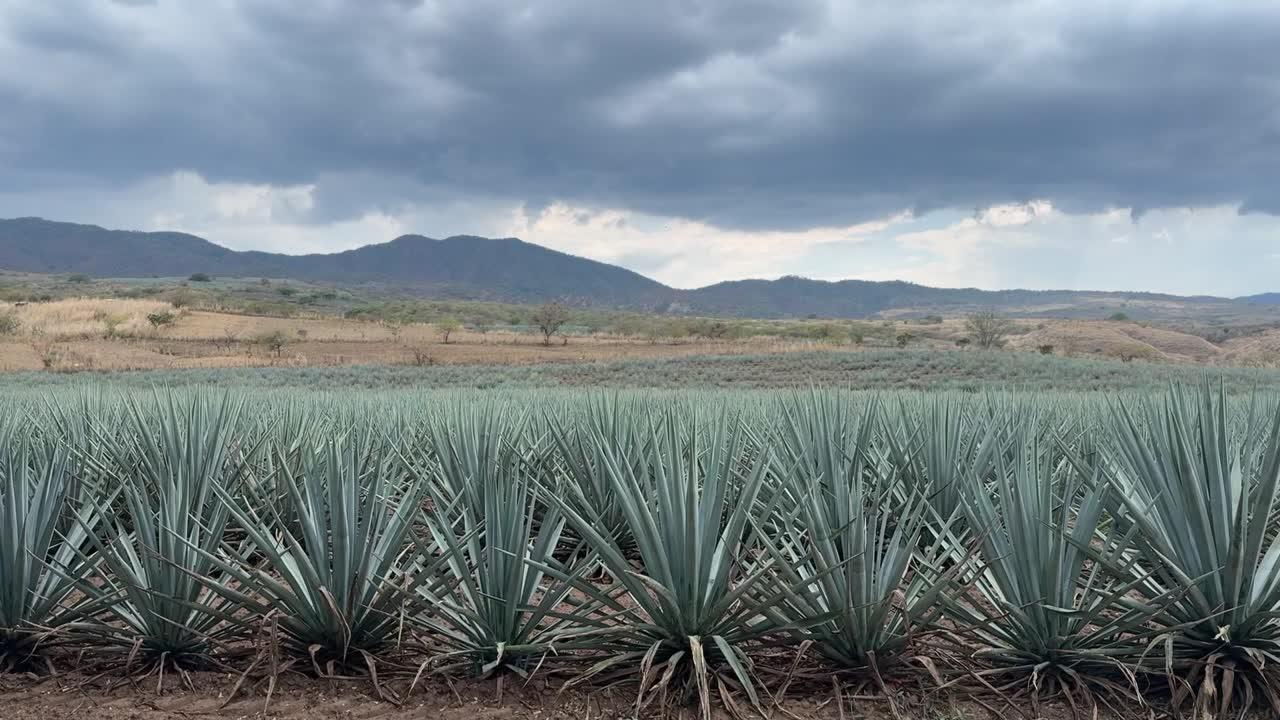
Ixtlán del Río, Nayarit
Nayarit is Jalisco's neighbouring state on the Pacific coast, one of the few places outside Jalisco where tequila may be made.
- Altitude
- around 1,050 m
- Soil
- young volcanic soil
- In the glass
- mineral, clear, a salty edge
- From us
- Real de Ixtlán
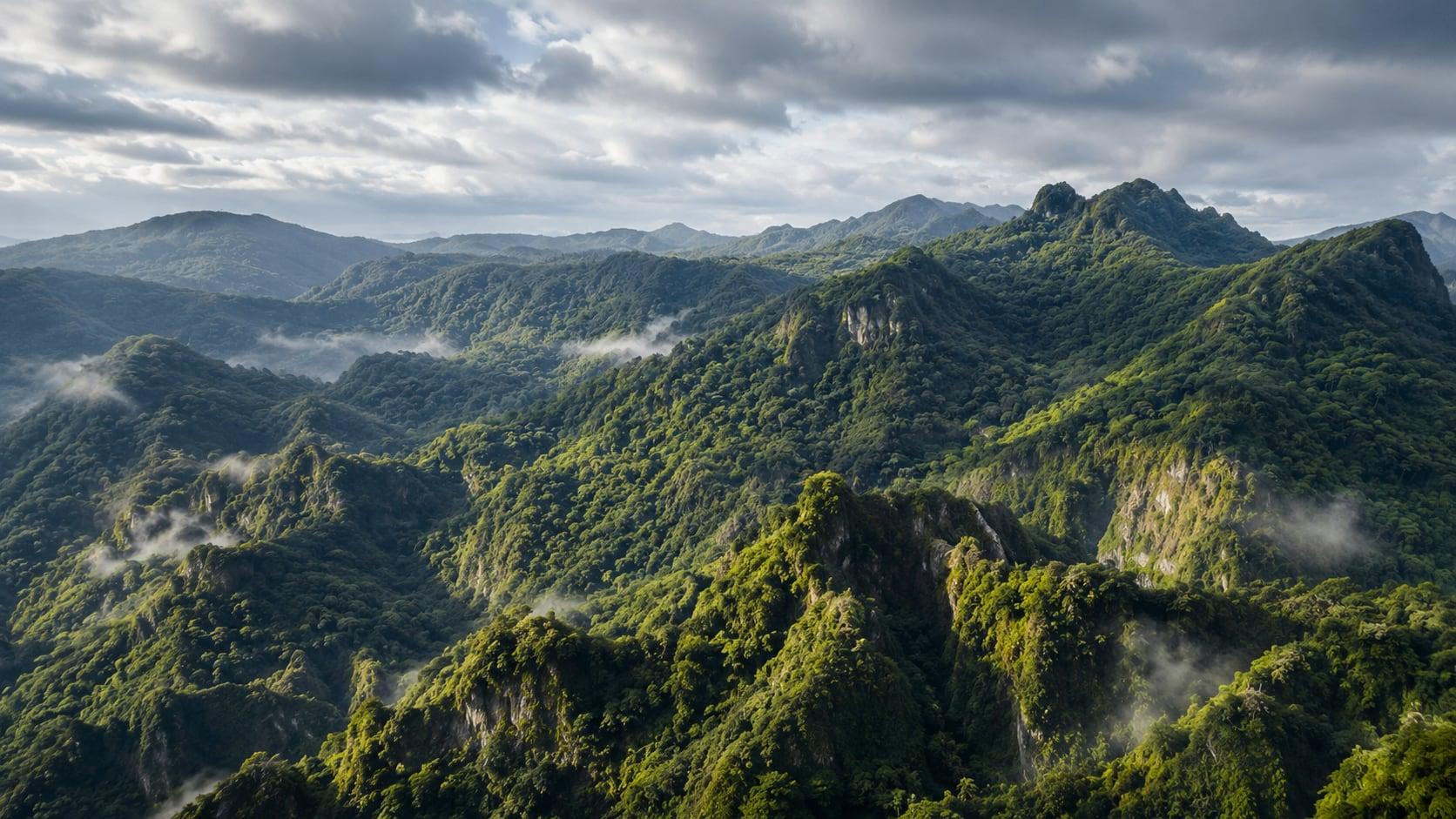
San Sebastián del Oeste, Sierra Madre
An old mountain village in the Sierra Madre Occidental, the mountains behind the seaside resort of Puerto Vallarta. Home of Raicilla de la Sierra.
- Altitude
- around 1,480 m
- Soil
- red volcanic soil, cloud forest
- In the glass
- floral, anise, forest floor, mineral
- From us
- La Xamana
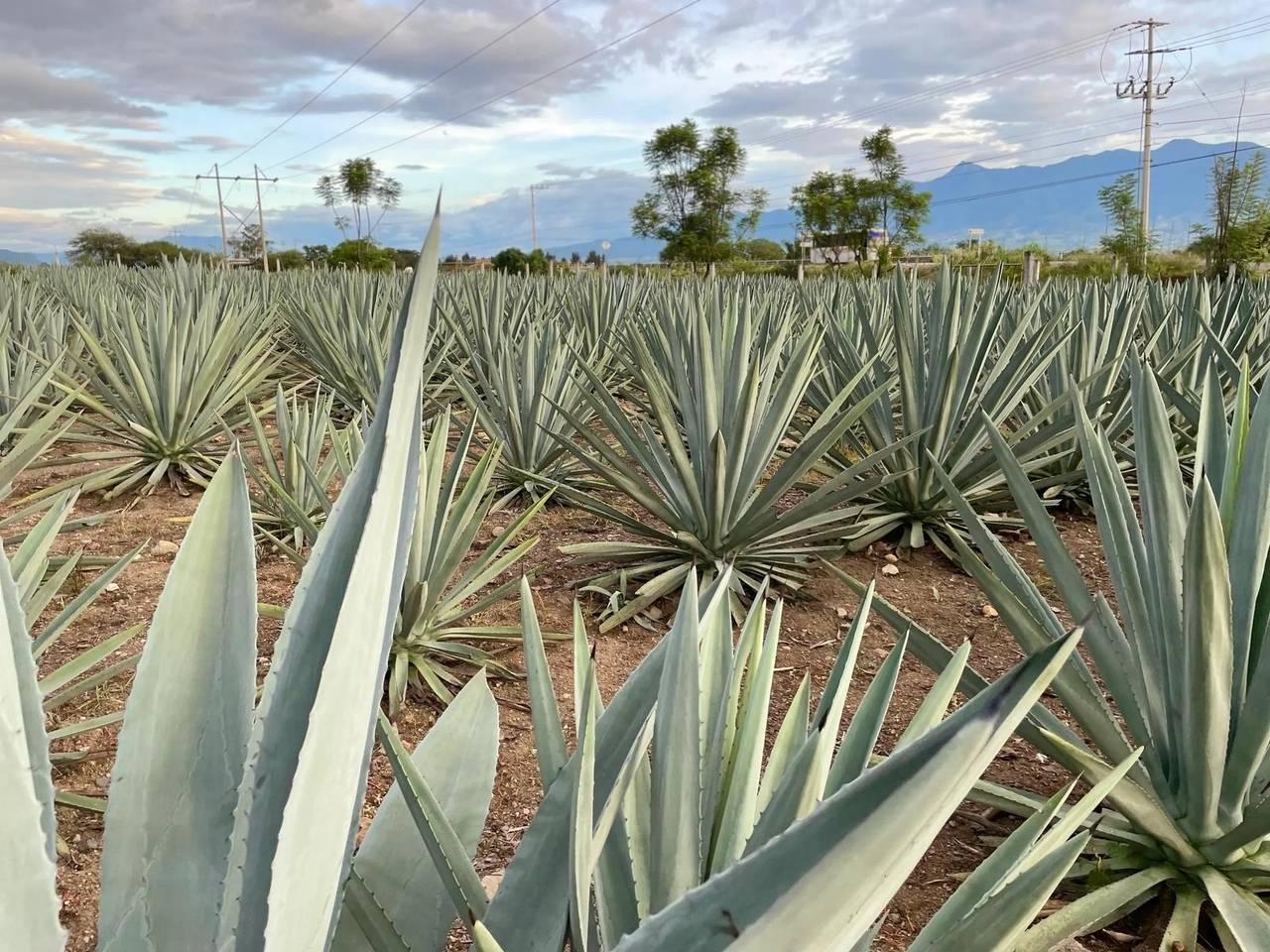
Santiago Matatlán, Oaxaca
Oaxaca is a state in southern Mexico and the home of mezcal. Santiago Matatlán calls itself the “world capital of mezcal”.
- Altitude
- around 1,740 m
- Soil
- stony, semi-arid
- In the glass
- smoke, roast, herbs, depth
- From us
- Kuzca
If you can taste the difference between a Chablis and a Meursault, you can taste the difference between highland and valley. It is the same logic: altitude, soil, night-time temperature.
The three families
Tequila
Discover Tequila- Origin
- Jalisco and parts of Nayarit, Guanajuato, Michoacán and Tamaulipas. Protected origin since 1974.
- Agave
- Blue Weber agave only (Agave tequilana), 6–8 years to maturity.
- Process
- Steamed in stone ovens or autoclaves. Heat without direct smoke.
- Character
- Clear, sweet and herbaceous, peppery. The most approachable place to start.
- Designation
- Tequila
Mezcal
Discover Mezcal- Origin
- Several states, centred on Oaxaca. Protected origin since 1994.
- Agave
- Over 30 permitted agave species, around 85 % is Espadín. 6 to 15 years to maturity.
- Process
- Roasted in conical earth ovens over wood and hot stones, hence the smoke.
- Character
- Smoky, earthy, mineral. Every batch tastes different.
- Designation
- Mezcal
Raicilla
Discover Raicilla- Origin
- The Sierra and Pacific coast of western Jalisco. Its own protected origin only since 2019.
- Agave
- Mainly Agave Maximiliana and Inaequidens, mostly wild-grown.
- Process
- Small ovens, direct fire, often clay or wooden stills.
- Character
- Floral, wild, untamed. Better suited to the experienced than to a first encounter.
- Designation
- Usually declared as an agave spirit in the EU
From field to glass
- 1
Maturing
An agave needs 6 to 15 years to build up enough sugar. It is harvested shortly before it flowers, after which the plant dies. Behind every bottle are at least six years.
Traditional
Wild-grown or planted according to the lunar calendar, harvested when fully mature.
Modern
Harvested early for faster turnover, meaning less sugar and less aroma. Maturation is the one thing that can't be shortened.
- 2
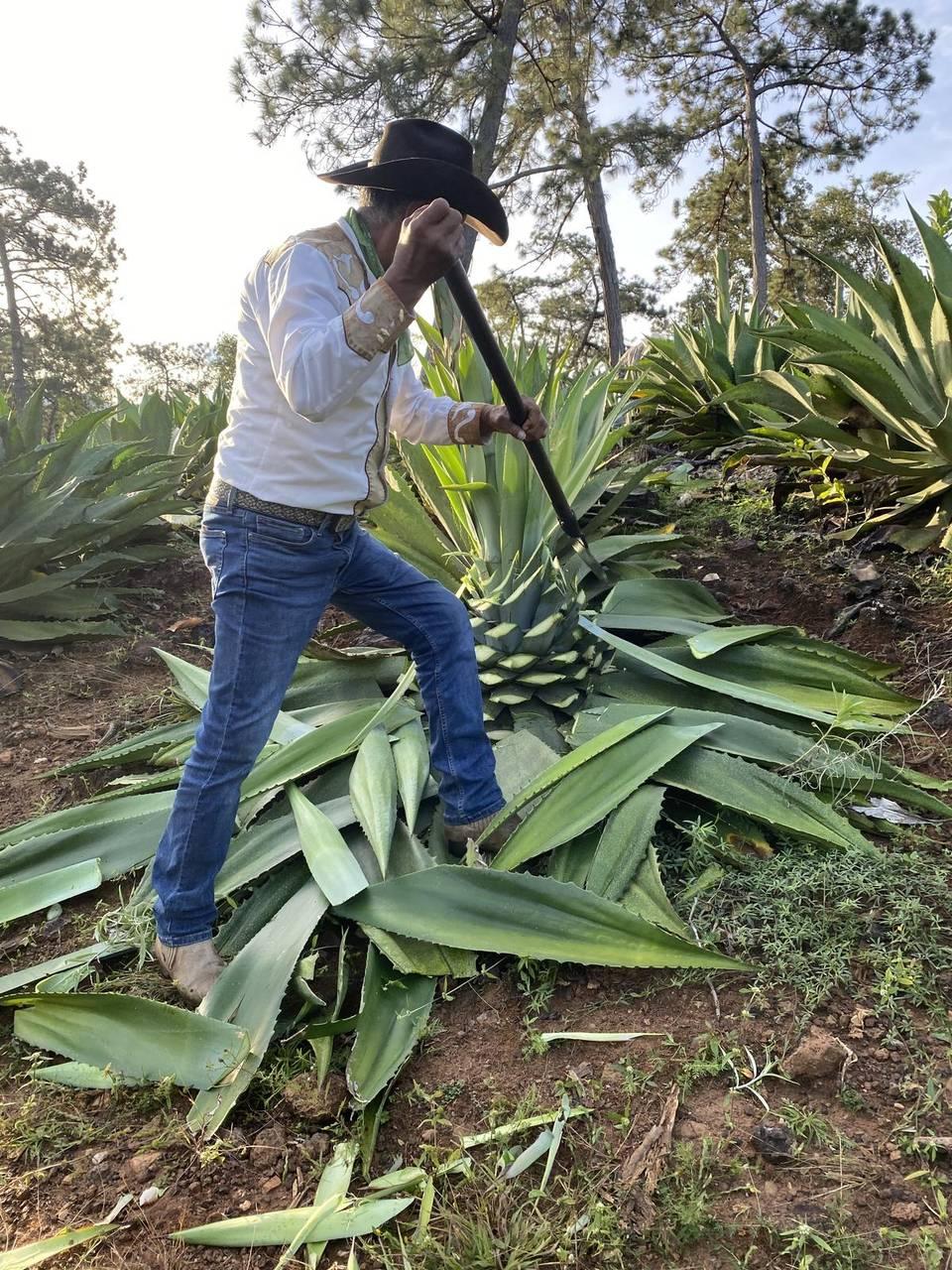
Jima, the harvest
The jimador cuts the leaves off by hand with the coa, a round blade on a long handle. What remains is the piña, the pineapple-shaped heart of the plant, weighing 30 to 200 kilos.
Traditional
By hand, leaf by leaf. How closely it is trimmed determines the bitterness.
Modern
The same principle, at piecework pace. Machines are still the exception here.
- 3
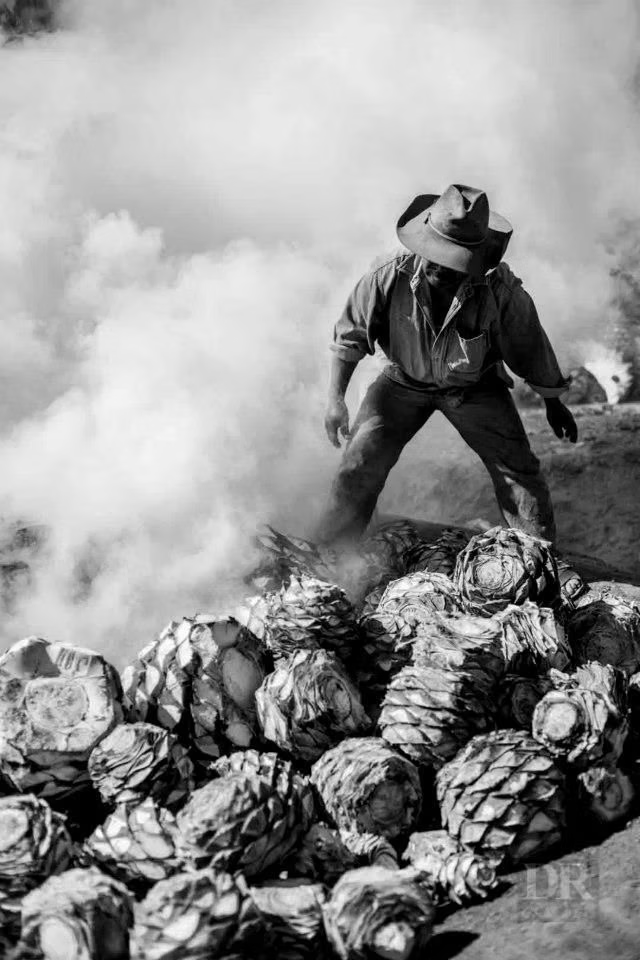
Cooking
The starch in the piña has to be turned into fermentable sugar. This step shapes the flavour more than any other. It is where the smoke of mezcal and the caramel sweetness of tequila come from.
Traditional
Earth oven with glowing stones (mezcal, raicilla) or a brick stone oven over 24–48 hours (tequila).
Modern
Stainless steel autoclave in a few hours: clean, precisely controllable and standard even at very good distilleries. The line is crossed only with the diffuser, which does not cook the agave but leaches it.
- 4
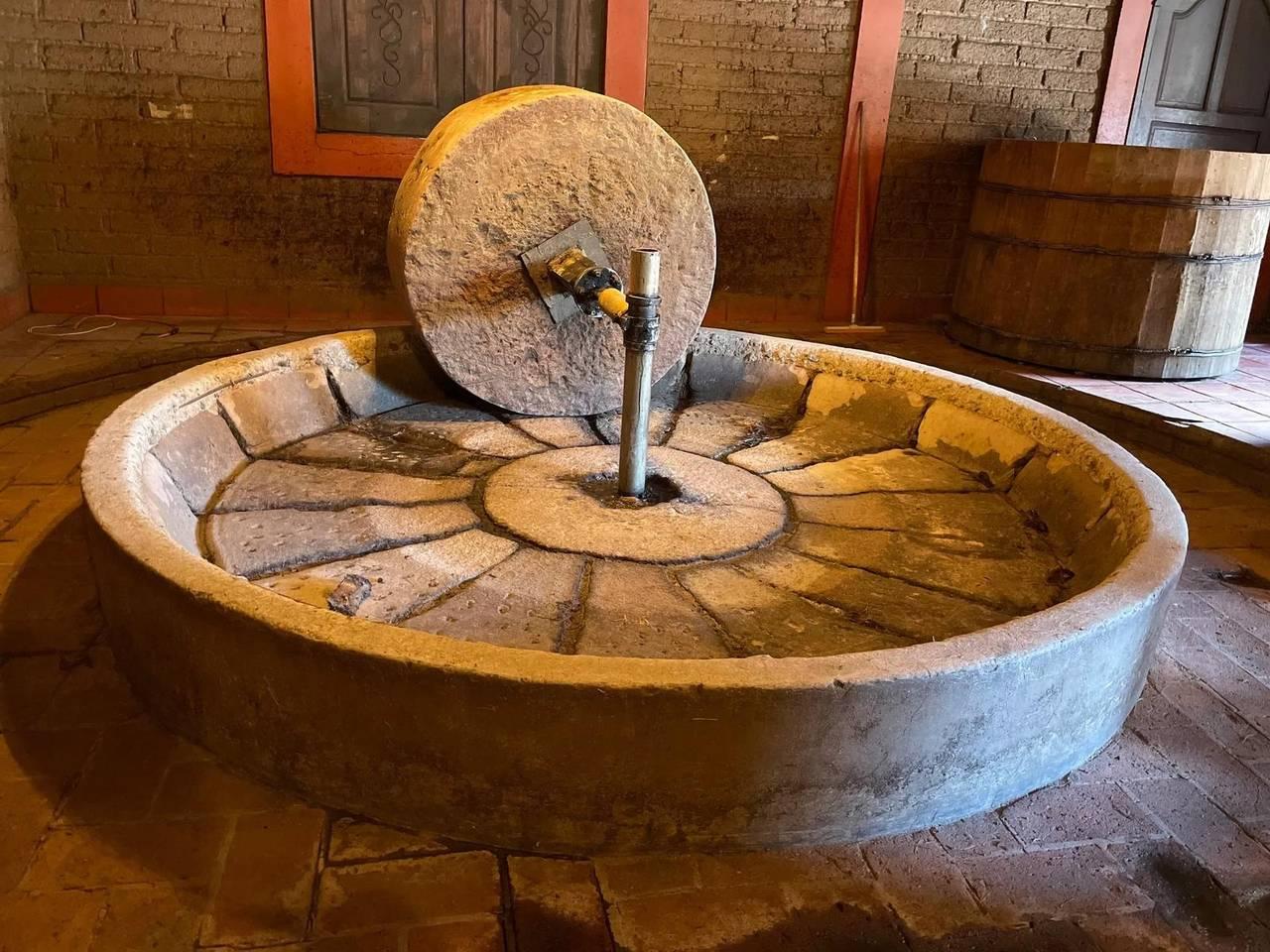
Milling
The cooked piñas are crushed to release the juice. How they are milled determines how much of the fibre and earthy notes come through.
Traditional
Tahona, a stone wheel often weighing a tonne or more, which crushes the fibres rather than tearing them.
Modern
Roller mill, often with added water. Efficient and high-yielding, with slightly fewer fibre and earthy notes in the glass.
- 5
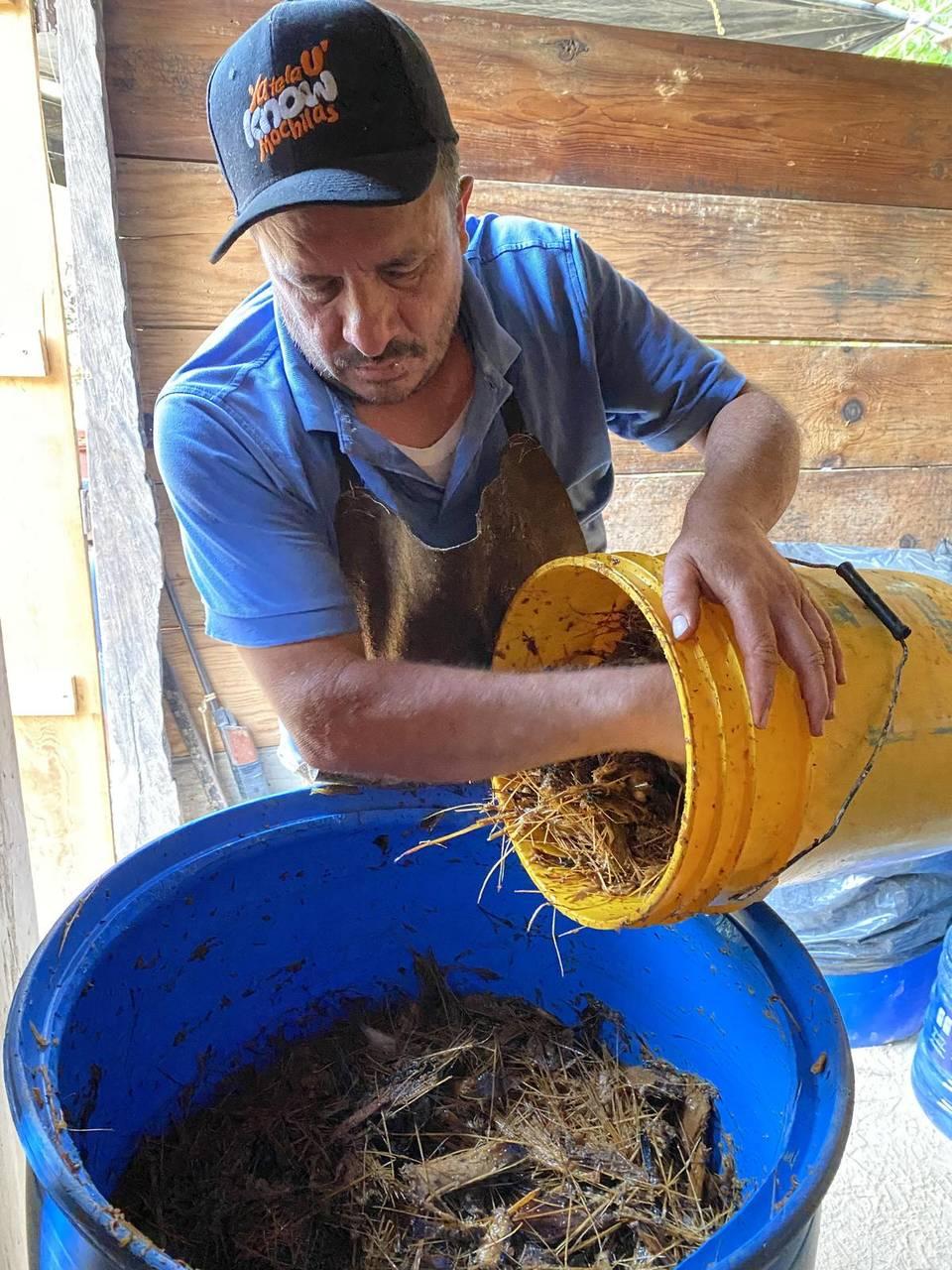
Fermentation
Yeasts turn the sugar into alcohol. Whether they come from the air or from a packet shows in the glass.
Traditional
Open, in wooden vats or stone troughs, with wild yeasts, over several days, fibres included.
Modern
Controlled fermentation in stainless steel tanks: reproducible and clean. It only becomes questionable when it is accelerated to 24 hours.
- 6
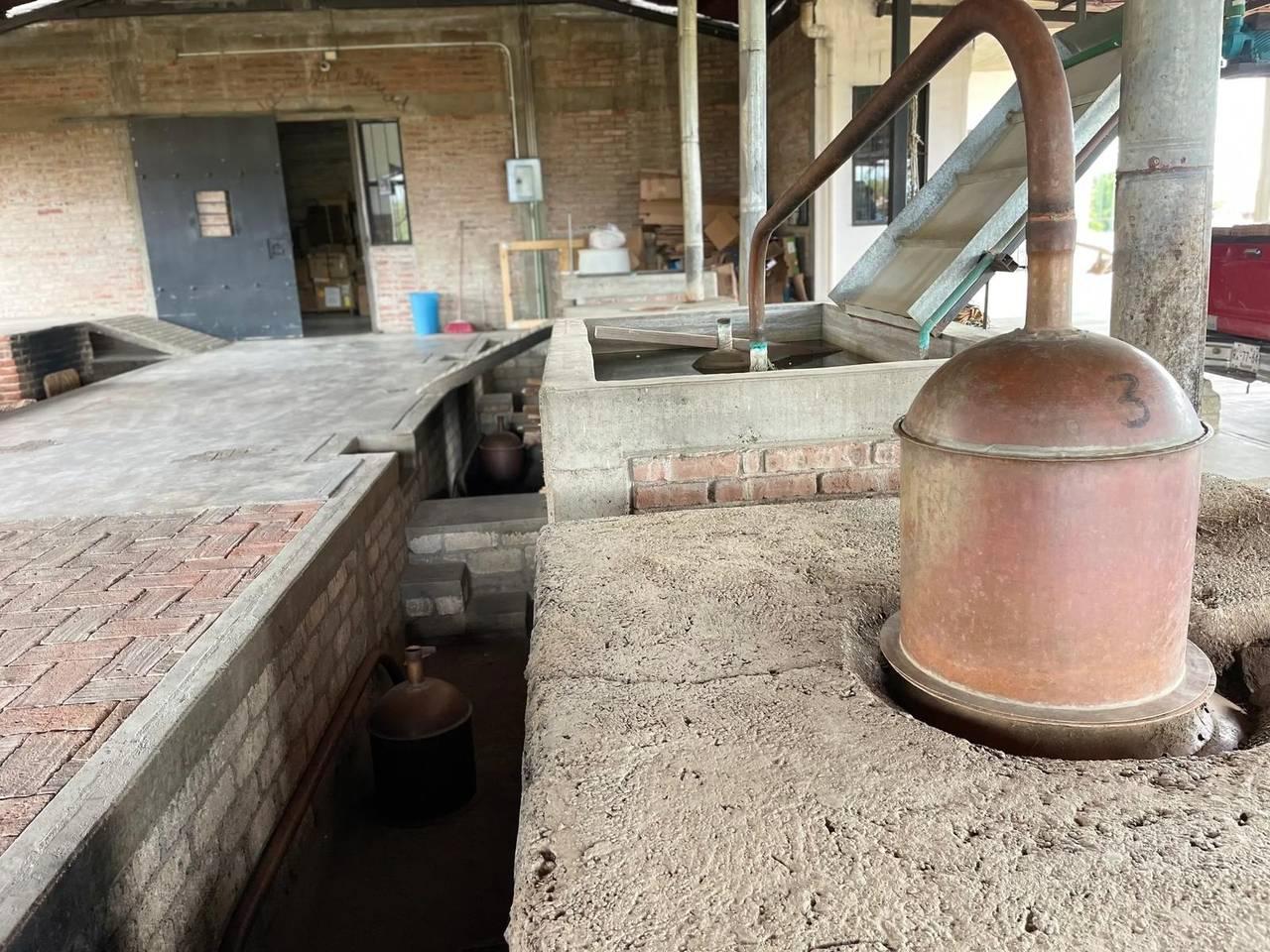
Distillation
Usually distilled twice. The maestro separates heads, heart and tails by smell, taste and the beads that form in the stream, not by instruments.
Traditional
Copper still, and for raicilla and some mezcal also clay or wood. Small batches, cuts made by hand.
Modern
Continuous column with controlled cuts: consistent, but also uniform.
The three ovens
Raw agave is inedible: only heat makes its sugar fermentable. How that heat works is the biggest single difference in flavour in the whole process, greater than barrel, yeast or still. Our range covers all three ovens.
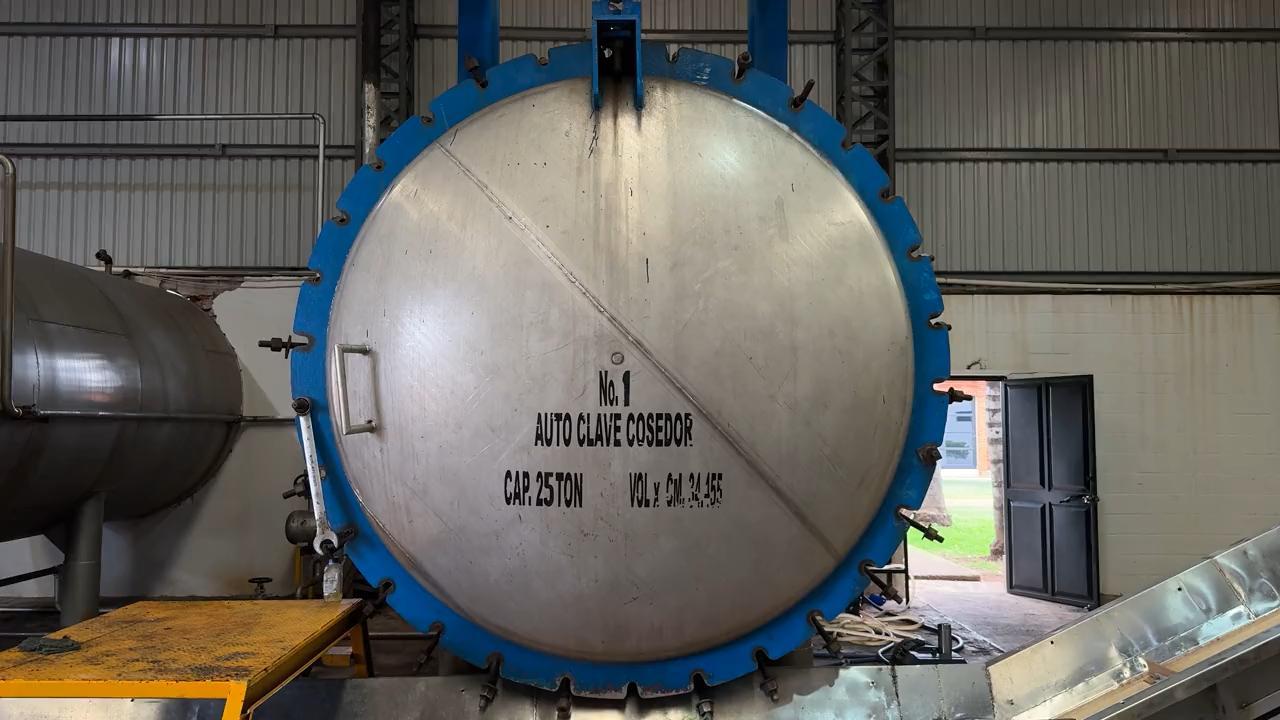 Autoclaveautoclave
A pressure vessel made of stainless steel. Steam cooks the agave evenly through for 8 to 20 hours.
Clean and precise: the agave comes through clearly, green, citrusy, herbal, mineral.
From us: Fuentes Guerra, Real de Ixtlán
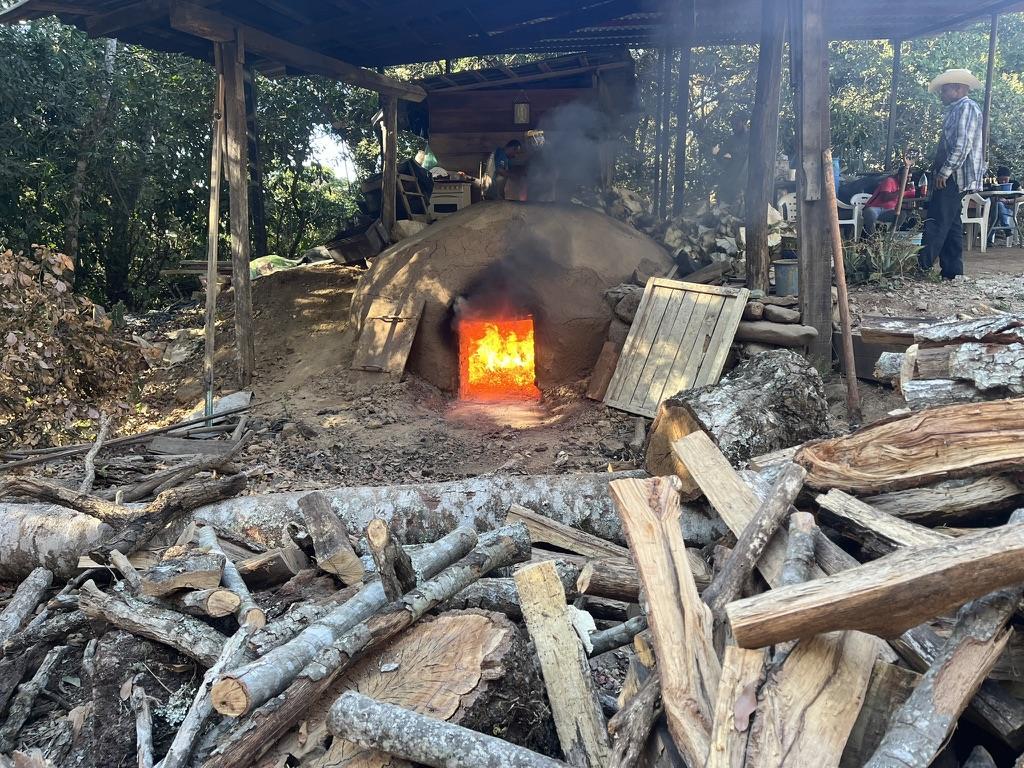 Masonry ovenhorno de mampostería
A stone chamber is heated red-hot with wood, then the agave goes in and the oven is sealed.
Roasted notes and caramel, a hint of wood, but no smoke like mezcal.
From us: La Xamana
- Earth pithorno de pozo
A pit in the ground, lined with stones. Wood burns until the stones glow, then the agave is laid on top, covered with fibres and earth, for three to five days.
This is the smoke in mezcal: not an ingredient, but the oven. Plus earth, leather and a dark sweetness.
From us: Kuzca
The autoclave is not a quality problem but a choice in favour of clarity. The only critical point is the diffuser, a machine that leaches raw agave with hot water instead of cooking it. Fast and high-yielding, at the expense of character. No label mentions it.
Blanco, Reposado, Añejo
- Blanco · Plata · Joven0 to 2 months
- Unaged or only briefly rested. Shows the agave and the distillery's signature without disguise.
- Reposado2 to 12 months
- “Rested” in oak. Vanilla, caramel and butter join in, but the agave stays in the lead.
- Añejo1 to 3 years
- Darker, rounder, with chocolate, dried fruit and tobacco. The easiest way in for a whisky drinker.
- Extra Añejo3 years or more
- A category of its own only since 2006. Rare and expensive. The agave recedes far into the background.
How to spot quality
“100 % de agave”
If this is missing, it is a mixto: at least 51 % agave, the rest other sugars. We stock only 100 % agave.
The NOM number
Four digits that identify the distillery. They show who really distilled it. Several brands often share one NOM.
No additives
Glycerine, flavourings and sweeteners need not appear on the label. That is why every house confirms it to us in writing: our bottles contain no additives.
Alcohol content
A producer who does not dilute down to 35 or 38 % vol. but bottles at 40 to 48 % chooses aroma over volume. A good sign.
Batch and maestro
A batch number, lot size and the name of the maestro mezcalero on the label mean this bottle belongs to a specific production run, not a continuous one.
Salt and lime
Not a Mexican ritual but a stopgap: salt dulls bitterness, acidity masks harshness. Invented for mixtos with up to 49 % other sugars.
The water test
A few drops of water in a Blanco: a clean spirit opens up, the nose grows more distinct, herbs and citrus come forward. If it turns flat and thin, something has usually been added.
How to enjoy it
The right glass
- The glass for savouringCopitasherry or nosing glass
The bowl gathers the aromas, the narrow rim focuses them towards the nose. The stem keeps the warmth of the hand away.
Best for: Blanco, Reposado, mezcal, raicilla, for tasting with attention
- Open and honestVeladorathe candle glass from Oaxaca
Low with a wide opening: the sharp alcohol vapour escapes at once, the real aromas stay. For young, powerful spirits.
Best for: Mezcal, raicilla, bold Blancos
- Only for aged spiritsSniftercognac glass
The large bowl pushes aroma upwards, but alcohol too. An aged Añejo benefits; with a young Blanco, mostly alcohol reaches the nose.
Best for: Añejo
- For the sip, not for the noseCaballitothe classic shot glass
Narrow and straight: it sends the alcohol directly to the nose and shows hardly any aroma. Still an everyday glass in Mexico, often with a second glass of sangrita alongside.
Best for: The quick sip
Tasting with method
Six habits that let every bottle show more.
- 1LookA brief swirl, then hold it up to the light. Slow, thick streaks on the glass (“legs”) mean more body.
- 2Nose with the mouth openFirst from a little distance, with the mouth slightly open. The alcohol escapes and the aromas come through. Never put the nose deep into the glass.
- 3The first sip is a kissOnly a touch, with the lips and the tip of the tongue. It accustoms the mouth to the alcohol. Without it, the whole first glass tastes of nothing but heat.
- 4The second sip is for tastingA little more, moved across the whole tongue. Now fruit, herbs, smoke or caramel come through.
- 5Breathe out through the noseAfter swallowing, breathe out slowly through the nose. Much of what we call taste is smelled on this way back.
- 6Let it lingerCount the seconds the flavour remains. Under five is short, over twenty is remarkable. Then a sip of water.
What sits next to the glass in Mexico
- TequilaSangritaA small glass of orange juice, lime and chilli next to the tequila. Sipped in turn: Mexico's answer to salt and lime.
- MezcalOrange and sal de gusanoOrange slices with salt made from roasted agave worms and chilli. It brings out the sweetness in the smoke.
- RaicillaChocolate and mangoA piece of dark chocolate (70 % or more) and a thin slice of mango. Bitter, fruity, floral: a little tasting without a cocktail.
The basics
With several spirits, light comes before dark and mild before smoky: Blanco first, then raicilla, then Reposado and Añejo, mezcal last. Smoke stays on the tongue for minutes and covers everything that follows.
- The temperatureRoom temperature, 18 to 22 °C, no ice. Cold locks in precisely the aromas that matter.
- The amount2 to 3 cl is enough. More only gets warmer, not better. With several bottles, the last ones would otherwise be lost.
- Water, not limeA glass of still water on the side, to reset the palate between sips. A few drops straight into the glass open up the aromas.
- StorageUpright, dark, not too warm. Unopened, it keeps practically indefinitely. Once opened, best drunk within a year.
Raicilla, the wild one from the Sierra.
Raicilla comes from western Jalisco, from the mountains behind Puerto Vallarta and the coast in front of them. For a long time it was only distilled for family and neighbours. It has had its own protected origin only since 2019.
The name means “little root” and is a cover: in the late 18th century the Spanish Crown banned and taxed mezcal to protect its brandy. The distillers claimed their spirit was made from the agave's root, not its heart, and so wasn't mezcal.
Raicilla de la Sierra
From the highlands around San Sebastián del Oeste and Mascota. Mainly Agave maximiliana and inaequidens, often wild-grown, cooked in above-ground ovens. Floral, fruity, fresh, with little smoke.
Raicilla de la Costa
From the coastal land towards the Pacific. Mainly Agave angustifolia and rhodacantha, more often cooked in an earth oven. Earthier, often with more smoke and a salty note.
La Xamana is a Raicilla de la Sierra: wild Maximiliana from the Ejido La Estancia de Landeros, cooked in a stone oven, distilled in a copper still. La Xamana
A short history
- before 1500Mayahuel and pulqueThe agave was sacred, embodied in the goddess Mayahuel. Its sap was fermented into pulque, milky and lightly alcoholic. Nobody was distilling yet.
- 16th c.The still arrivesThe Spanish bring distillation with them. When their brandy runs out, they distil what is available: agave. So the whole category begins.
- 1902A German nameThe botanist Franz Weber describes the blue agave. Ever since, it has been called Agave tequilana Weber.
- 1974Protected originFrom now on, tequila may only come from certain regions and only from blue Weber agave. Mezcal follows in 1994.
- 2006UNESCO World HeritageThe agave landscape around Tequila becomes a World Heritage Site. In the same year, Extra Añejo becomes a class of its own.
- 2019Raicilla goes officialWhat for decades was distilled only for family and neighbours gets its own protected origin.
Glossary
- Agave · Maguey
- Not a cactus but a member of the asparagus family. Over 200 species, a good dozen of which are distilled.
- Piña
- The trimmed heart of the agave. Pineapple-shaped, weighing 30 to 200 kilos, the actual raw material.
- Jima · Jimador
- The harvest by hand and the man who carries it out. A trade passed down through generations.
- Coa
- A round blade on a long handle, used to cut the leaves off the piña.
- Palenque · Vinata
- The craft distillery: palenque for mezcal, vinata for raicilla.
- Tahona
- A stone wheel weighing a tonne or more that mills the cooked piñas, traditionally pulled by a horse.
- Mosto
- The fermented mash of agave juice and fibres that goes into the still.
- Alambique
- The still. Usually copper, and for traditional raicilla also clay or hollowed-out wood.
- Espadín
- The most common mezcal agave. Cultivated, 6 to 8 years to maturity, the backbone of the category.
- Tobalá
- A wild mountain agave, small and rich in sugar. Takes up to 15 years and many times more plants per bottle.
- Ensamble
- A mezcal made from several agave species that are cooked and distilled together, not blended afterwards.
- Maximiliana
- The typical raicilla agave from the Sierra, often wild-harvested. Brings floral, green notes.
- NOM
- Norma Oficial Mexicana, the four-digit number that identifies every licensed distillery.
- CRT
- Consejo Regulador del Tequila: the body that oversees origin, agave content and production.
- Quiote
- The agave's flower stalk, up to eight metres tall. If it is cut off early (the plant is then called a capón), the sugar stays in the heart.
- Inulin
- The agave's storage sugar: a long chain that yeast cannot ferment. Only cooking breaks it down.
- Hijuelo
- An offshoot at the foot of the mother plant, with identical genes. This is how blue Weber agave is propagated.
- Autoclave · Horno · Earth pit
- The three ovens: steam pressure in stainless steel, a masonry stone oven, and the earth pit with glowing stones that gives mezcal its smoke.
- Difusor
- A machine that leaches raw agave with hot water instead of cooking it. High yield, little character.
- Mixto
- Tequila with only 51 % agave sugar, the rest from other sources. Recognisable by the absence of “100 % agave”.
- Artesanal · Ancestral
- Mezcal categories: artesanal with an earth pit or stone oven and a copper or clay still, ancestral with only an earth pit and a clay pot.
- Copita · Veladora
- The two glasses for agave spirits: the copita with a bowl for nosing, and the low veladora from Oaxaca for bold spirits.
- Sangrita
- A spicy companion of orange juice, lime and chilli that sits next to the tequila, not in it.
- Mayahuel
- The Aztec goddess of the agave. The relationship with the plant is thousands of years older than distilling.